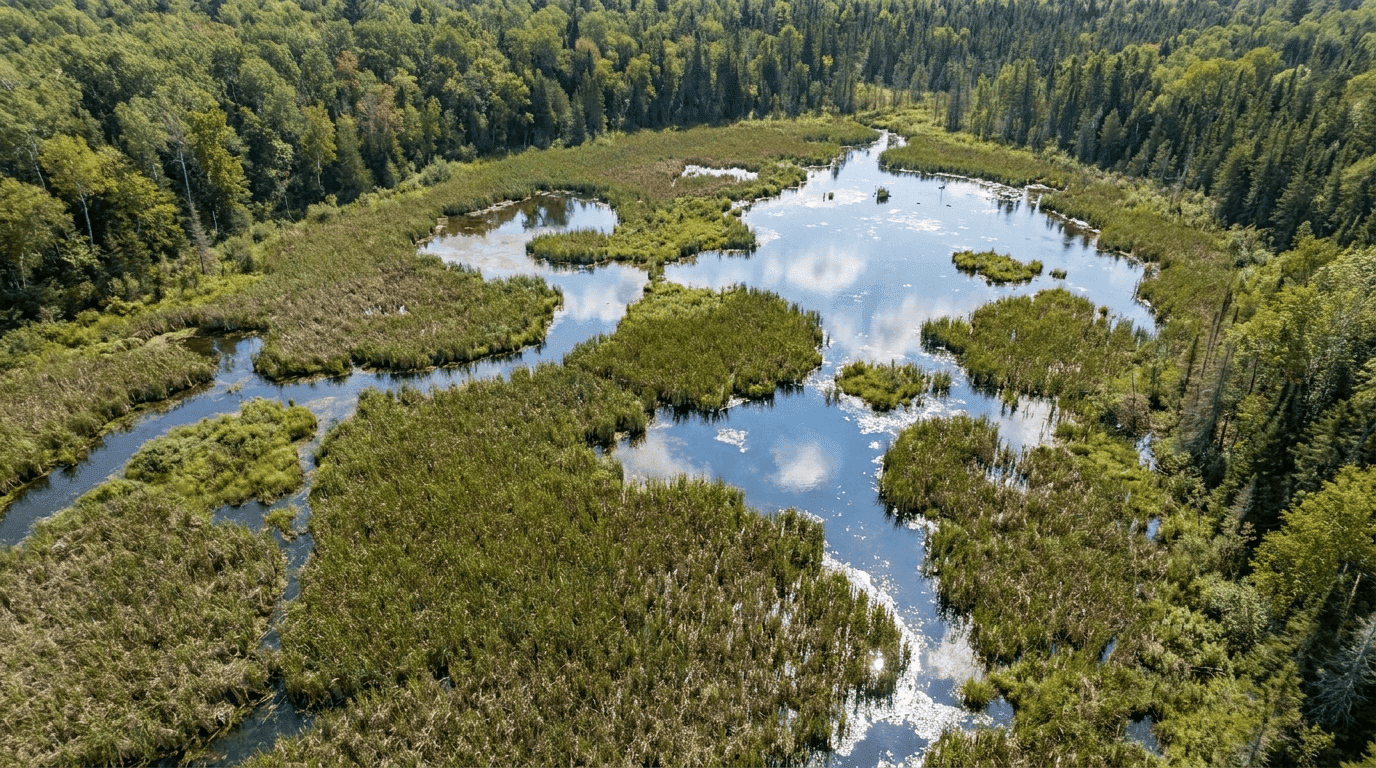
Wetlands do not look impressive.
A marshy stretch of land along a river. A low-lying area that stays soggy after rain. A pond surrounded by cattails and reeds.
They look like nothing in particular.
But wetlands are among the most productive and valuable ecosystems on the planet. And they are disappearing faster than almost any other habitat type.
What Wetlands Actually Are
A wetland is land that is saturated with water either permanently or seasonally. That saturation creates conditions where water-tolerant plants thrive and specialized soils develop.
There are several main types:
| Type | Description | Common Location |
|---|---|---|
| Marshes | Shallow water with emergent plants like cattails and reeds | River edges, lake margins |
| Swamps | Dominated by trees and shrubs | Floodplains, river corridors |
| Bogs | Peat-forming, acidic, fed by precipitation only | Northern climates, upland areas |
| Fens | Peat-forming but fed by groundwater | Valleys, low-lying areas |
| Prairie potholes | Small shallow depressions | Upper Midwest, Great Plains |
Each type supports different plant and animal communities and provides different ecological services.
What Wetlands Do for Water Quality
Wetlands function as natural water treatment systems.
As water flows through a wetland it slows down. That slowdown allows sediment to settle out rather than continuing downstream. Plants and soils absorb nutrients like nitrogen and phosphorus that would otherwise fuel algae growth in lakes and rivers.
The specific functions include:
- Filtering sediment and suspended particles from runoff
- Absorbing excess nutrients before they reach open water
- Breaking down some pollutants through natural microbial processes
- Removing bacteria through exposure to sunlight and settling
- Storing excess water during flood events and releasing it slowly
A single acre of wetland can store up to 1.5 million gallons of floodwater. In a watershed with intact wetlands, flood peaks are lower and more gradual. In a watershed where wetlands have been drained or filled, the same storm produces faster and higher floods.
Wetlands as Wildlife Habitat
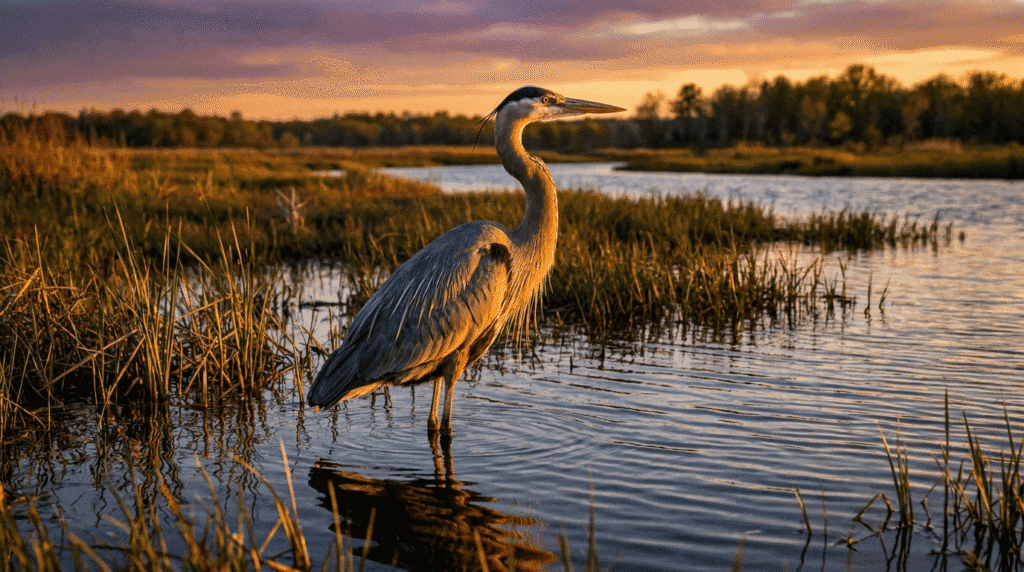
More than a third of all threatened and endangered species in the United States depend on wetlands for some part of their life cycle.
Wetlands provide:
- Nesting and feeding habitat for waterfowl and migratory birds
- Spawning and nursery habitat for fish
- Breeding habitat for amphibians including frogs, salamanders, and toads
- Foraging habitat for mammals including muskrats, beaver, and otter
- Stopover sites for migratory birds traveling long distances
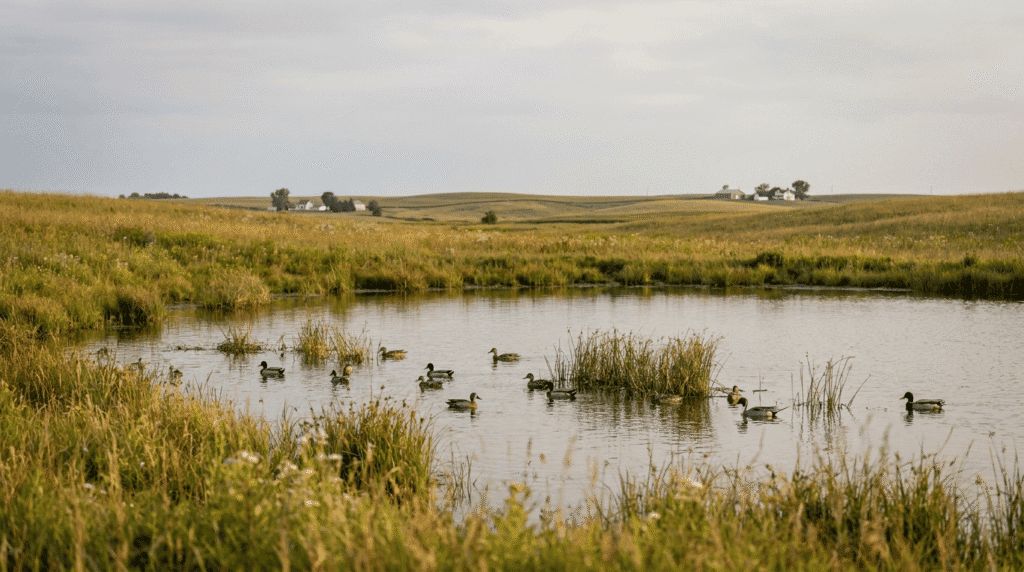
Prairie potholes in the upper Midwest, though small individually, collectively support more than 50 percent of North American migratory waterfowl. These shallow seasonal wetlands are often called the duck factory of North America.
How Much Has Been Lost
The United States has lost more than half of its original wetland area since European settlement. Some states have lost 80 to 90 percent.
The losses came from:
- Agricultural drainage to convert wetlands to cropland
- Urban development filling low-lying areas
- Road construction altering drainage patterns
- Ditching and channeling to speed water movement off the land
The ecological consequences have been significant. Increased flooding. Degraded water quality in lakes and rivers. Declining wildlife populations. Reduced groundwater recharge.
Wetland protection and restoration has become a priority in watershed management precisely because the losses have been so large and the consequences so visible.
What Wetland Protection Looks Like
Protecting remaining wetlands starts with understanding what is there. Most states maintain wetland inventories that map wetland locations and types.
Restoration focuses on reconnecting wetlands that were drained or isolated from the watershed. Removing drain tiles, plugging ditches, and restoring native vegetation can bring degraded wetlands back to function relatively quickly.
For homeowners near wetlands the most important action is maintaining a vegetated buffer between upland areas and the wetland edge. Mowing to the water’s edge removes the filtering vegetation that makes wetlands effective. Leaving a strip of native plants between lawn and wetland protects both the wetland and the water quality downstream.
Leave a Reply