Most people think about their water supply as something that starts at a treatment plant or a well.
It does not.
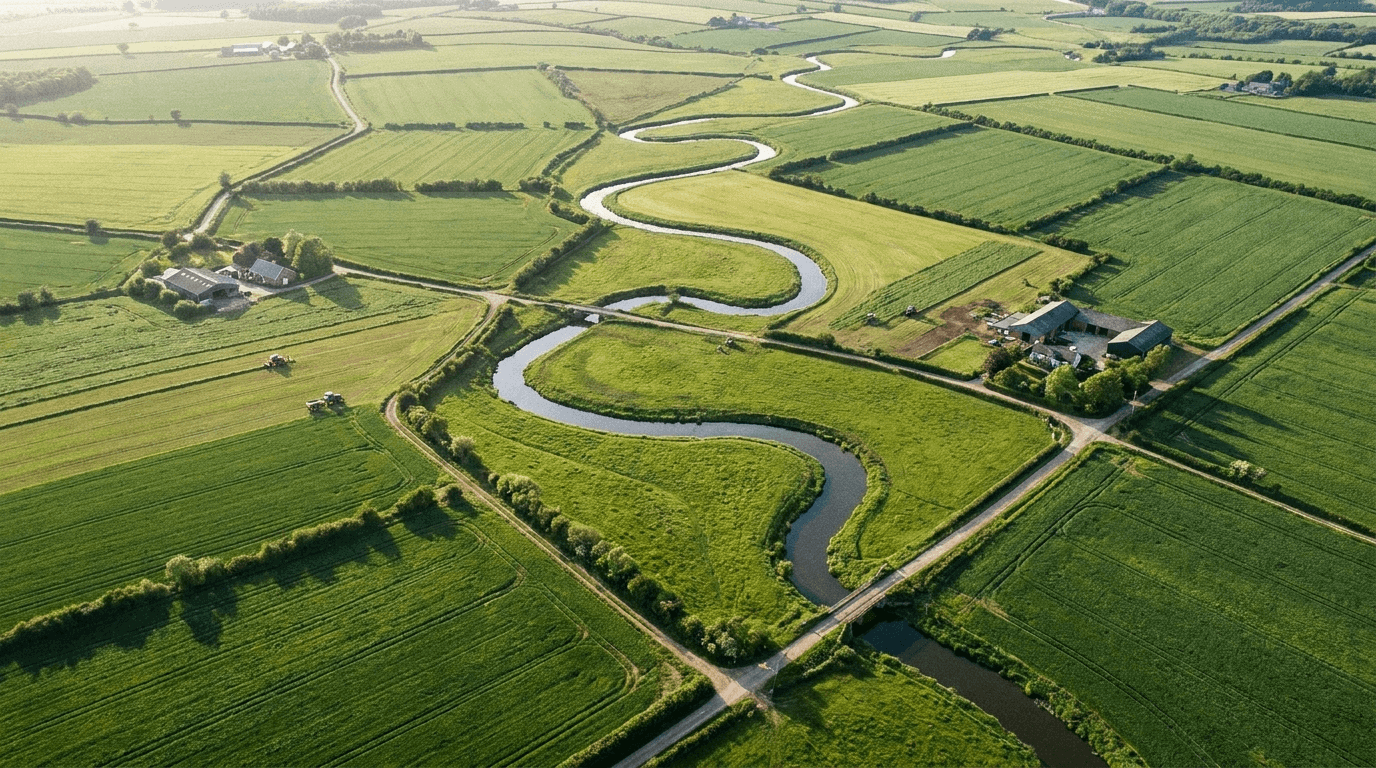
It starts miles away. On a hillside, a farm field, a parking lot, or a forest floor. Long before water reaches a pipe it has traveled through a watershed, picking up whatever was on the land along the way.
Understanding that journey explains a lot about what ends up in your glass.
The Path From Rain to Tap
When precipitation falls on a watershed it moves through the landscape in stages before reaching a water supply.
| Stage | What Happens | Water Quality Impact |
|---|---|---|
| Land surface | Runoff carries sediment, nutrients, bacteria, and chemicals into streams | High – pollutants enter the system here |
| Streams and rivers | Water moves toward reservoirs, lakes, or groundwater recharge zones | Moderate – some natural filtering occurs |
| Groundwater | Water infiltrates through soil and rock over months or years | Low to moderate – soil filters many contaminants |
| Treatment plant | Disinfection, filtration, and chemical treatment before distribution | Reduces most regulated contaminants |
| Distribution system | Water travels through pipes to homes and businesses | Can pick up lead or copper from older pipes |
For households on private wells the treatment plant stage does not exist. Whatever reaches the groundwater in your watershed can reach your well directly.
What the Watershed Sends Downstream
The contaminants that show up in drinking water are not random. They reflect what is happening on the land in the watershed upstream.
Nutrients
Nitrogen and phosphorus from fertilizers and animal waste fuel algae blooms in reservoirs and lakes. Some algae produce toxins that are difficult to remove through conventional treatment. The EPA tracks nutrient pollution as one of the most widespread water quality problems in the country.
Sediment
Eroded soil from construction sites, farm fields, and stream banks clouds source water and carries other pollutants attached to soil particles. High sediment loads increase treatment costs and can carry pesticides and heavy metals into the water supply.
Bacteria
E. coli and other pathogens enter watersheds from agricultural runoff, failing septic systems, and wildlife. Municipal treatment removes bacteria effectively through chlorination and filtration. Private well owners have no such backstop.
Chemical contaminants
Pesticides, herbicides, industrial chemicals, and PFAS enter watersheds from agricultural operations, industrial sites, and consumer product use. PFAS compounds are particularly concerning because they do not break down naturally and accumulate over time.
The EPA’s drinking water contaminant list covers the regulated limits for many of these substances. Current standards and monitoring requirements are published at epa.gov/ground-water-and-drinking-water.
What Treatment Does and Does Not Remove
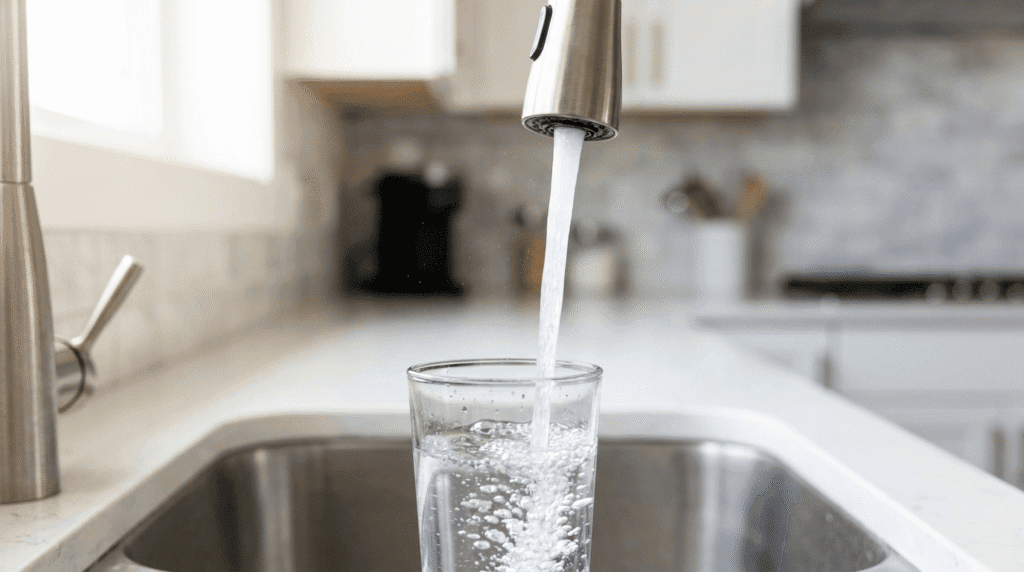
Municipal treatment plants are effective at removing many contaminants but not all of them.
What treatment handles well:
- Bacteria and most pathogens through chlorination and UV treatment
- Sediment and turbidity through filtration
- Some heavy metals through pH adjustment and filtration
- Taste and odor compounds through activated carbon
What treatment handles less effectively:
- Some PFAS compounds at low concentrations
- Nitrates — require specialized treatment not present at all plants
- Some pharmaceuticals and emerging contaminants
- Lead and copper leaching from distribution pipes after the plant
The gap between what enters the watershed and what treatment removes is where residential filtration becomes relevant for homeowners who want additional protection beyond the tap.
Private Wells Are Different
For the roughly 43 million Americans on private wells there is no municipal treatment between the watershed and the tap.
Well water quality reflects local geology and local land use. A well near agricultural fields faces different risks than one in a forested area. A shallow well is more vulnerable to surface contamination than a deep confined aquifer.
The only way to know what is in well water is to test it. A basic panel covering bacteria, nitrates, hardness, iron, and pH is a reasonable starting point. Testing for PFAS or other site-specific contaminants may be warranted depending on nearby land use.
The USGS National Water Information System provides water quality data for thousands of monitoring locations across the country and can help homeowners understand regional groundwater conditions at waterdata.usgs.gov.
The Watershed Connection
The quality of your drinking water is not just a plumbing or treatment question. It is a land use question.
What farmers, developers, homeowners, and local governments decide to do with the land in your watershed determines what reaches your water supply before treatment ever begins. Protecting watershed health is the most cost-effective form of drinking water protection available.
That connection runs in both directions. Actions that protect local waterways protect drinking water. And understanding what is in your water starts with understanding where it came from.
Leave a Reply