
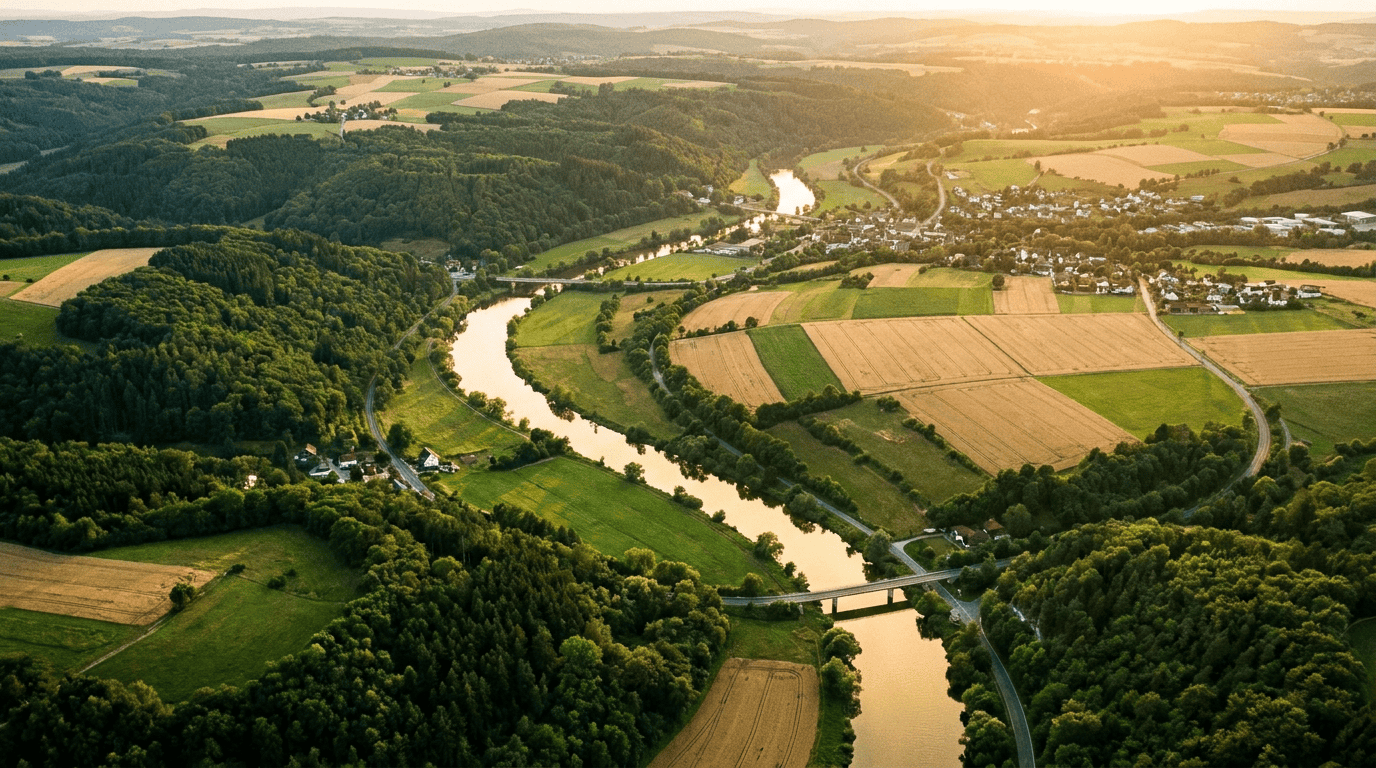
A watershed is not a place you can visit. It is not marked on most maps.
But every time it rains, you are standing in one.
A watershed is the area of land that drains to a common point. A lake, a river, a wetland, or an ocean. Everything within that boundary channels water downhill toward the same destination when it rains or when snow melts.
Ridge lines and hills define the boundary. Water falling on one side drains one direction. Water falling on the other side drains somewhere entirely different. Two neighborhoods separated by a single hill can sit in completely different watersheds.
That matters because whatever happens on the land within a watershed affects the water at the bottom of it.
How Water Moves Through a Watershed
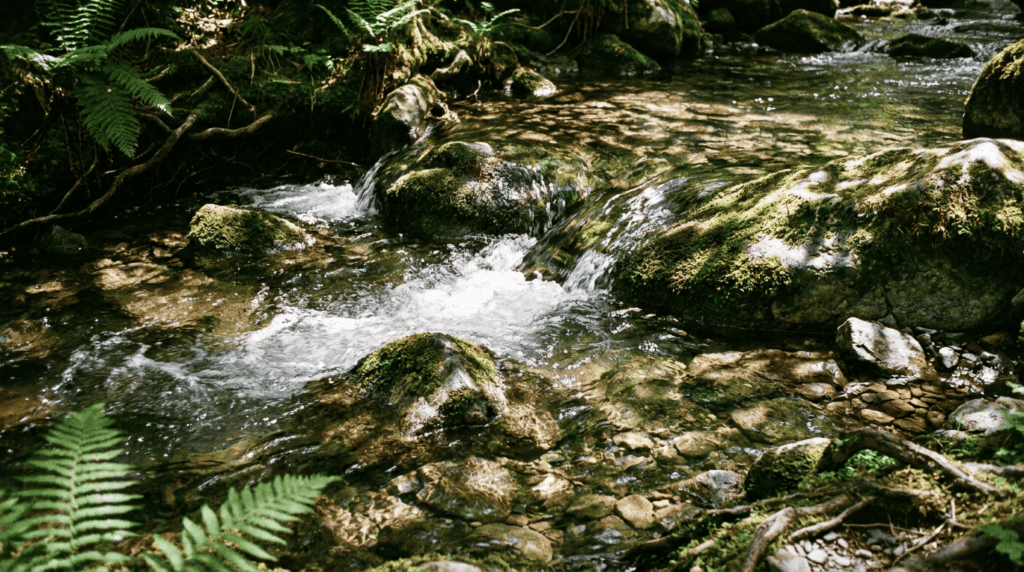
When rain falls, water takes one of three paths:
| Path | What Happens | Why It Matters |
|---|---|---|
| Surface runoff | Flows across land into streams and drains | Fastest path, carries pollutants directly to waterways |
| Infiltration | Soaks into soil and moves to groundwater | Natural filtration through soil and rock layers |
| Evapotranspiration | Plants absorb and release water to atmosphere | Forests and wetlands return large volumes of water to air |
The balance between these three pathways determines watershed health.
Developed land with roads, rooftops, and parking lots eliminates infiltration and increases runoff dramatically. A forested watershed absorbs and filters far more water than a developed one of the same size.
Why Watershed Boundaries Matter
Watershed boundaries do not follow political lines.
A single watershed can span multiple counties, states, or even countries. The Mississippi River watershed covers 41 percent of the continental United States, draining parts of 31 states into one river system.
This creates a real challenge for water quality. A city that releases inadequately treated wastewater upstream affects the drinking water of communities fifty miles away. A farm applying excess fertilizer three counties over can show up in a reservoir downstream.
Watershed-based management addresses this by treating the natural drainage area as the unit of management rather than political boundaries.
Signs of a Healthy Watershed
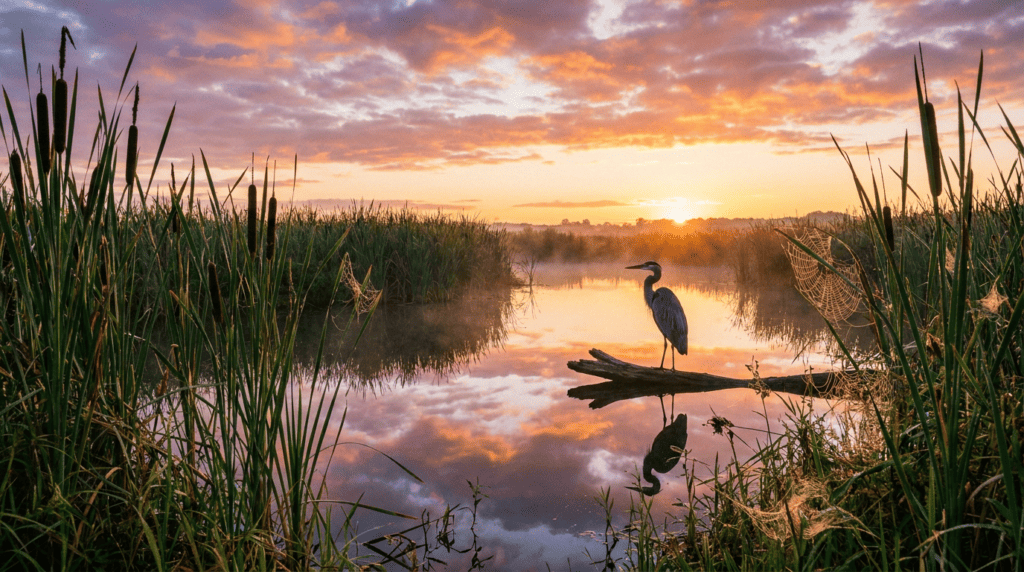
A healthy watershed has recognizable characteristics:
- Forests and native vegetation covering significant land area, especially along stream corridors
- Wetlands in low-lying areas acting as natural sponges during storm events
- Healthy soils with good structure that allow water to infiltrate rather than run off
- Stable stream banks with clear water and gravel beds
- Aquatic life across a full range of species indicating water temperature and oxygen levels are balanced
Riparian buffers along streams are particularly important. These vegetated strips slow runoff, filter sediment, stabilize banks, and keep water temperatures within the range aquatic life needs.
The Watershed You Live In
Every person on earth lives in a watershed. In the United States alone there are more than 2,000 named watersheds covering the entire continental land area.
Finding yours is straightforward. The EPA’s How’s My Waterway tool lets anyone enter their address and see which watershed they live in, what water quality data exists for local waterways, and what impairments have been identified nearby.
The connection is not abstract. What happens in your watershed reaches your waterways. What happens upstream reaches you.
Leave a Reply